

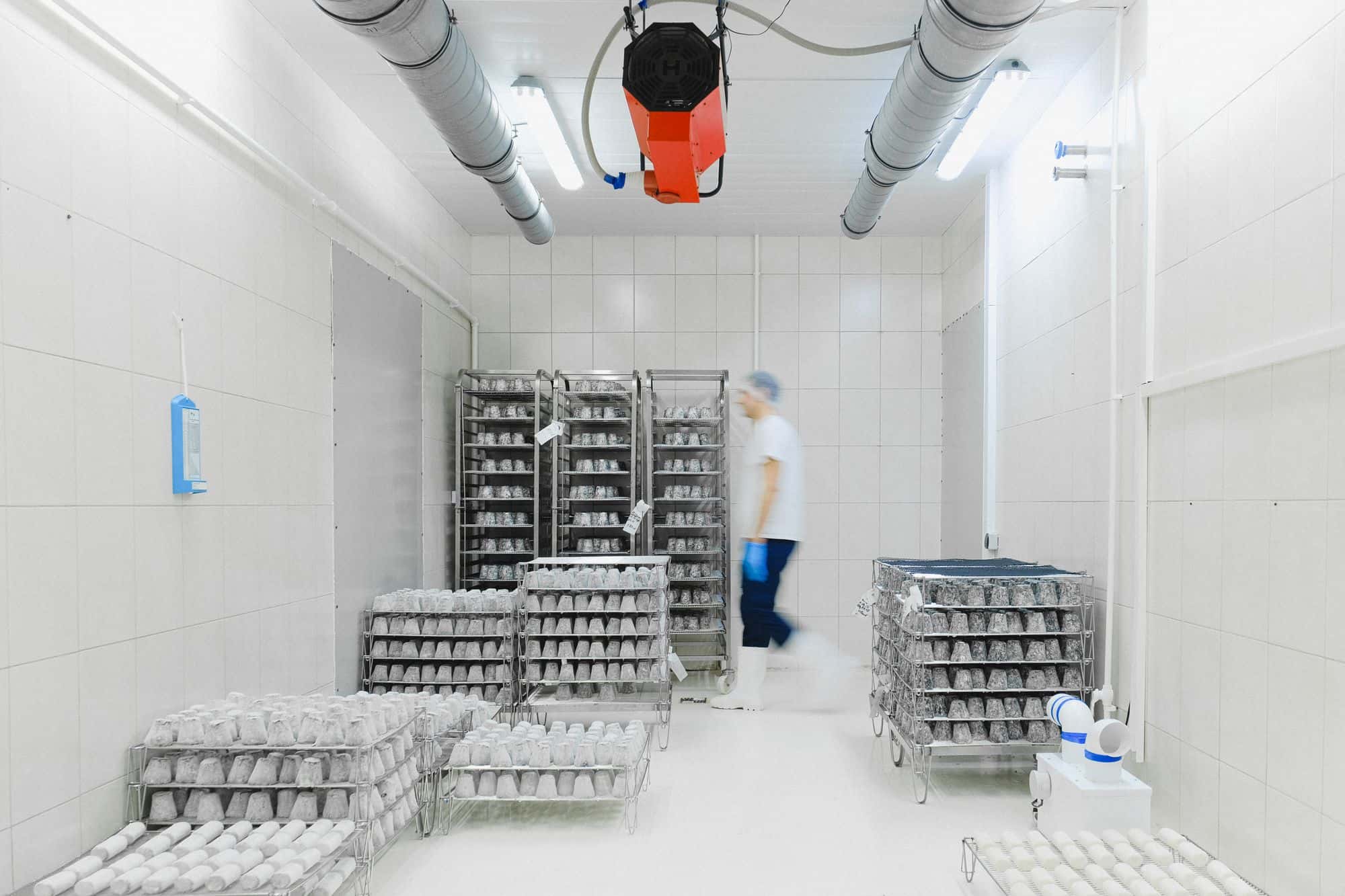
Freezer rooms and walk-in freezers in Dammam, Saudi Arabia
Jadan designs, builds, supplies, installs and maintains walk-in freezer rooms for frozen food, meat, seafood and other products, built for Saudi Arabian heat.
A freezer room, also called a walk-in freezer, is an insulated room held at −18 °C or colder to store frozen product. Jadan designs, builds, supplies, installs and maintains freezer rooms from Dammam. See our Refrigeration & HVAC page for all our cold storage services.
What is a freezer room?
A freezer room is a walk-in cold store that keeps product frozen. It is built from insulated sandwich panels, cooled by evaporators inside and a condensing unit outside, and controlled to hold a steady low temperature. Restaurants, hotels, caterers, supermarkets, food factories and meat, poultry and seafood distributors all use walk-in freezers to store frozen stock in bulk.
Frozen meat, poultry and fish
- Typical temperature
- −18 to −25 °C
Frozen vegetables and ready meals
- Typical temperature
- −18 to −22 °C
Ice cream
- Typical temperature
- −25 °C or lower
How a walk-in freezer is designed
A freezer holds a much bigger temperature difference than a chiller, so every part of the design works harder. These are the main points we plan for.
- Panel thickness: typically 100 to 150 mm of polyurethane (PU) or PIR insulation.
- Floor: an insulated floor, with frost-heave protection where the room sits on the ground.
- Door: insulated hinged or sliding door with a heated frame and a pressure-relief vent.
- Evaporators: sized for the heat load, with electric or hot-gas defrost to clear frost from the coil.
- Condensing unit: sized for peak summer ambient, not an average day.
- Controls: temperature controller, high and low alarms and optional remote monitoring.
- Layout: pallet or rack storage, aisle widths and door positions planned around how you load and unload.
Built for Saudi heat
Dammam and the Eastern Province have very hot, humid summers. A freezer works hardest exactly when the outdoor air is hottest, so the condensing unit must be sized for peak ambient and placed where it can breathe. A room in direct sun needs extra insulation or shading, and humid air entering through the door freezes on the evaporator, so door discipline and defrost settings matter.
Equipment and materials we use
We build with components from established brands, chosen to suit each project. The right selection depends on the room, the temperature and the site.
- Compressors and condensing units: Bitzer, Copeland and Dorin
- Evaporators: FrigaBohn, Güntner, Lu-Ve and Thermoway
- Insulated panels: SPF Panels and Assan Panel (Kibar)
- Insulated cold room doors: MTH
- Controls and valves: Danfoss
- Copper pipes: Mueller
From site survey to handover
- Site survey: we visit, measure and understand what you store and how you use the space.
- Design: layout, panel thickness, refrigeration capacity and controls matched to your load.
- Quotation: clear, itemised pricing and timeline.
- Installation: built by our own technicians, on schedule.
- Handover: testing, commissioning and training.
- Maintenance: Basic, Standard and Premium 24/7 plans to keep the system running.
What to send for a quotation
Send us what you will store and how much, the temperature you need, the space available or site drawings, the power supply and the site location through the contact page or WhatsApp. We then arrange a site survey and give you an itemised quotation.
Frequently asked questions
What temperature should a walk-in freezer be?
Frozen food is normally stored at −18 °C or colder. Many operators run freezers at −20 to −25 °C for a safety margin, and ice cream is typically held at −25 °C or lower.
How thick should freezer room panels be?
As a general guide, 100 to 150 mm for freezers, depending on the temperature, the ambient conditions and whether the room is indoors or in the sun.
What is the difference between a freezer room and a blast freezer?
A freezer room stores product that is already frozen. A blast freezer freezes fresh or chilled product quickly with strong, very cold airflow, then the product moves to a freezer room for storage.
Why does a freezer room need an insulated floor?
Without insulation, the cold travels into the ground and can freeze the soil below, which lifts and cracks the floor. An insulated floor, with frost protection where needed, prevents this and cuts energy use.
Do you maintain freezer rooms?
Yes. We offer Basic, Standard and Premium 24/7 maintenance plans for refrigeration systems, with terms tailored to each site.
How do I get a freezer room quotation?
Send us what you will store, the temperature and size you need and the site location through the contact page or WhatsApp. We arrange a site survey and then give you an itemised quotation.
Planning a cold room or refrigeration system?
Tell us what you store and where, and we will arrange a site survey and quotation.