

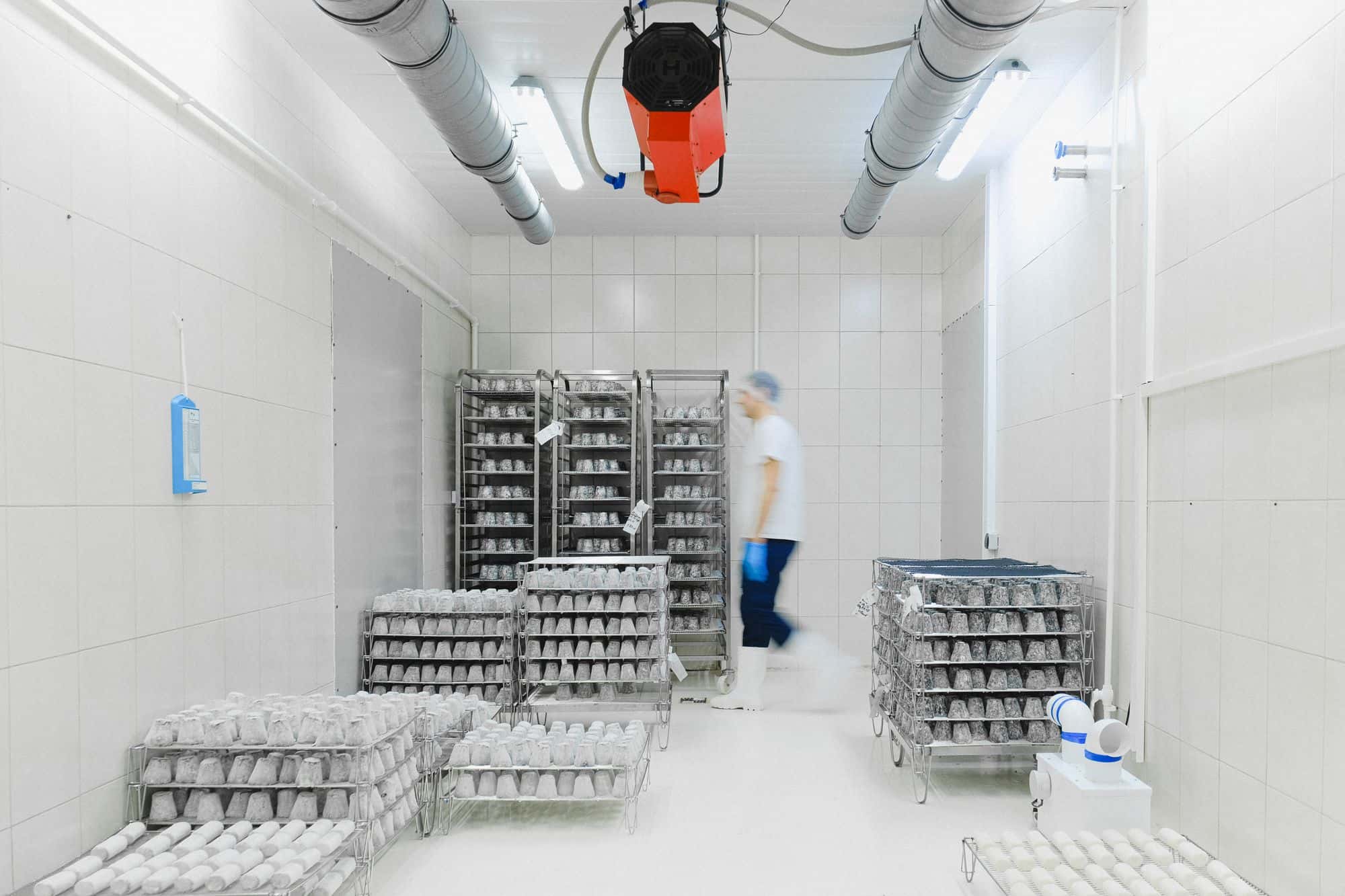
Cold room design guide: planning a walk-in chiller or freezer
Temperatures by product, insulation, refrigeration, doors, heat load in Saudi conditions, what affects cost, and how a project runs from site survey to handover.
A cold room is a walk-in insulated room kept at a set low temperature by a refrigeration system. Designing one well means matching the room to what you store, how often you open it and the climate around it. This guide explains the decisions involved, so you can brief a contractor or check a quotation. Jadan designs, installs and maintains cold rooms and commercial refrigeration from Dammam; see our Refrigeration & HVAC page for the full service.
Chiller or freezer?
The first decision is the temperature. These are typical ranges; your product decides the exact set point.
Walk-in chiller (cold room)
Typically 0 to +5 °C
For fresh produce, meat, dairy, beverages and prepared food that must stay cold but not frozen. Thinner panels, simpler defrost and lower running cost than a freezer.
Walk-in freezer
Typically −18 to −25 °C
For frozen food, meat and fish. Needs thicker insulation, an insulated floor with frost protection, heated door frames, electric or hot-gas defrost and a stronger refrigeration system.
Cold room temperatures by product
Typical storage temperatures. Always check the product supplier's instructions and the food safety or pharmaceutical rules that apply to you.
Fresh meat (beef, lamb)
Chiller
−1 to +2 °C
Poultry (fresh)
Chiller
0 to +4 °C
Fresh fish
Chiller
0 to +2 °C
Milk, yoghurt, cheese
Chiller
+2 to +5 °C
Eggs
Chiller
0 to +4 °C
Leafy vegetables, berries
Chiller
0 to +4 °C
Tropical fruit (banana, mango)
Cool room
+10 to +13 °C
Beverages
Chiller
+2 to +8 °C
Pharmaceuticals, vaccines
Chiller, with monitoring
+2 to +8 °C
Frozen meat, fish, ready meals
Freezer
−18 to −25 °C
Ice cream
Freezer
−25 °C or lower
What goes into a cold room design
Product and temperature
What you store sets the temperature, and the temperature sets everything else: panel thickness, refrigeration capacity and running cost.
Room size and layout
Pallet or shelf storage, aisle widths, forklift or trolley access and door positions are planned around how your team moves product in and out.
Insulated panels and floor
Sandwich panels form the walls and ceiling. Freezers also need an insulated floor, with frost-heave protection where the room sits on the ground.
Refrigeration system
A condensing unit outside and evaporators (unit coolers) inside, sized to the room's heat load, with a defrost method suited to the temperature.
Doors and access
Hinged or sliding insulated doors, strip curtains and door heaters keep the cold in. Freezer doors also need heated frames and a pressure-relief vent.
Controls and monitoring
Temperature controllers, high and low alarms and optional remote monitoring protect stock if a unit fails or a door is left open.
Insulated panel thickness
Cold room walls and ceilings are made from insulated sandwich panels, usually a polyurethane (PU) or polyisocyanurate (PIR) core between steel skins. Thicker panels lose less cold but cost more. Our projects use panels from brands such as SPF Panels and Assan Panel (Kibar), with insulated doors from MTH.
| Chiller / cool room (0 to +5 °C) | Typically 75 to 100 mm |
|---|---|
| Freezer (−18 to −25 °C) | Typically 100 to 150 mm |
| Deep freeze (below −25 °C) | Typically 150 mm or more |
What else to check on panels
- Fire performance of the insulation core, and any local requirement for it
- Food-safe, easy-to-clean surfaces such as pre-painted or stainless steel skins
- Tight, sealed joints, since air leaks cause ice build-up and wasted energy
- A floor built for your load, such as pallet trucks or forklifts
The refrigeration system
Heat is removed from the room by evaporators inside and rejected outdoors by a condensing unit. Getting the capacity right depends on the heat load. We build with compressors and condensing units from Bitzer, Copeland and Dorin, copper pipes from Mueller, evaporators from FrigaBohn, Güntner, Lu-Ve and Thermoway, and Danfoss controls and valves.
The main parts
- Condensing unit. Sits outside, holds the compressor and condenser, and releases heat to the air.
- Evaporator (unit cooler). Mounted inside, a coil and fans that cool the room air.
- Expansion valve and controls. Regulate refrigerant flow and hold the set temperature.
- Defrost. Air defrost is usually enough for chillers; freezers use electric or hot-gas defrost to clear frost from the coil.
What makes up the heat load
- Product load
- Heat removed from the product itself, especially when warm stock is loaded daily.
- Transmission
- Heat entering through walls, roof and floor. Rises with ambient temperature and falls with panel thickness.
- Air infiltration
- Warm, humid air entering every time a door opens. Often the biggest factor in busy rooms.
- Internal loads
- Lighting, evaporator fans, people and forklifts working inside the room.
- Defrost
- Heat added during defrost cycles, which the system must then remove again.
Designing a cold room for Saudi heat
Dammam and the Eastern Province have very hot summers and a humid coast. That affects a cold room in three ways. The condensing unit works harder when outdoor air is hot, so it must be sized for peak summer ambient, not an average day. A room in direct sun gains more heat through its roof and walls, so shading or extra insulation pays back. And humid air entering through the door brings moisture that freezes on the evaporator, so door discipline and defrost settings matter more than in a cooler climate.
What affects the cost of a cold room
Every room is priced to its own design, so there is no fixed price per square metre. These are the factors that move the figure.
- Room size and the temperature you need to hold
- Panel thickness, door type and number of doors
- Refrigeration capacity and the type of system
- Whether the room sits indoors or in direct sun
- Floor construction, drainage and electrical supply
- Controls, alarms and remote monitoring
- Distance from the site to the installation team
What we need from you
Send us these and we can prepare a design and quotation.
- What you will store, and how much
- The temperature you need to hold
- How often product goes in and out
- Site dimensions, or drawings if you have them
- Power supply available at the site
- Where the outdoor unit can be placed
Common cold room design mistakes
Sizing for today only
A room sized exactly for current stock leaves no room to grow. Plan for future volume.
Ignoring door traffic
A room opened 100 times a day needs a different design from one opened ten times.
Choosing the unit by horsepower alone
Capacity must match the heat load at the temperature and ambient you actually have.
Poor drainage and airflow
Blocked evaporator airflow or standing water causes ice build-up and uneven temperatures.
No alarm or backup plan
Without an alarm, a failure overnight can be found only when the stock is already lost.
How a cold room project runs
- 01Site SurveyWe visit, measure and understand your needs.
- 02DesignEngineering and layout tailored to your space.
- 03QuotationClear, itemised pricing and timeline.
- 04InstallationDelivered by our own technicians, on schedule.
- 05HandoverTesting, commissioning and training.
- 06MaintenanceOngoing service to keep systems running.
Maintaining a cold room
A cold room that fails overnight can lose a full stock of product. Regular service keeps condenser and evaporator coils clean, door seals tight, defrost working and alarms tested, and finds small faults before they become breakdowns. We offer Basic, Standard and Premium 24/7 maintenance plans for refrigeration systems.
See refrigeration maintenance plansFrequently asked questions
What temperature should a walk-in chiller be?
Most fresh food is held between 0 and +5 °C. Meat and fish sit at the cold end of that range, around 0 to +2 °C, while dairy and beverages are usually held at +2 to +5 °C. Always follow the supplier's storage instructions and the food safety rules that apply to your business.
What temperature should a walk-in freezer be?
Frozen food is normally stored at −18 °C or colder. Many operators run freezers at −20 to −25 °C for a safety margin, and ice cream is typically held at −25 °C or lower.
What is the difference between a cold room and a freezer room?
A cold room (chiller) keeps product cold but unfrozen, usually 0 to +5 °C. A freezer room holds product frozen, at −18 °C or below. Freezers need thicker insulation, an insulated and protected floor, electric or hot-gas defrost and a stronger refrigeration system, so they cost more to build and run.
How thick should cold room insulated panels be?
As a general guide, 75 to 100 mm for chillers and 100 to 150 mm for freezers. The right thickness depends on the temperature, the ambient conditions and whether the room is indoors or exposed to the sun.
Can a cold room work in Saudi Arabia's summer heat?
Yes, but the design has to allow for it. Outdoor ambient temperatures in the Eastern Province can be very high, so the condensing unit must be sized and placed for those conditions, and a room exposed to direct sun needs more insulation or shading than one inside a building.
What affects the cost of a cold room?
The main factors are room size, the temperature held, panel thickness, door type, refrigeration capacity, floor construction and the controls or monitoring you choose. A site survey is the only reliable way to price a specific room.
How often should a cold room be serviced?
Condensers, evaporators, door seals and controls should be inspected on a regular schedule, with the interval depending on how heavily the room is used. Regular service prevents the breakdowns that put stored product at risk.
Which equipment brands do you use for cold rooms?
We use compressors and condensing units from Bitzer, Copeland and Dorin, copper pipes from Mueller, evaporators from FrigaBohn, Güntner, Lu-Ve and Thermoway, Danfoss controls and valves, insulated panels from SPF Panels and Assan Panel (Kibar), and insulated doors from MTH, among others, chosen to suit each room.
How do I get a cold room quotation?
Send us what you will store, the temperature you need, the space available and the site location through the contact page or WhatsApp. We then arrange a site survey, prepare the design and give you an itemised quotation.
Planning a cold room?
Tell us what you store and where, and we will arrange a site survey and quotation.